Precision.Calm.Care. — Dr. Nima Allahyari
Board-Certified Neurosurgeon, Brain & Spine Surgery Tabriz
From the first question to follow-up after treatment, with clear explanations and support at every step.
First understand what is going on, then decide.
Dr. Nima Allahyari is a neurosurgeon for brain and spine in Tabriz. Hearing "you may need surgery" or reading a frightening MRI report is often what brings a patient in. The aim here is that you know what is wrong, what your options are, and what to expect at each step. Not every patient has surgery; the decision follows a neurological examination, a review of your scans and a conversation with you.
More about the doctorFind your symptom.
Tap the symptom closest to yours to reach the matching treatment page. If yours is not listed, or you are worried, call support.
- Back pain that shoots down the leg
- Neck pain that shoots down the arm
- Numbness or tingling in the hand or foot
- Leg pain on walking that eases on sitting
- A scan report that mentions a brain mass
- After a blow to the head
- Back or neck pain without muscle weakness
- I want to know if there is a way without surgery
These signs do not wait for an appointment.
If you have any of these, do not wait for a booking. Call 115 (Iran's emergency number) or go to the nearest emergency department.
- Sudden weakness or numbness in both legs, or loss of control of the bladder or bowels
- The sudden, worst headache of your life
- Sudden weakness on one side of the body, trouble speaking or a drooping face
- A seizure or heavy drowsiness after a head injury
From non-surgical care to brain and spine surgery.
Every patient has their own path. The right approach is chosen after a neurological examination and a review of your MRI or CT, and surgery comes up only when it is really needed.
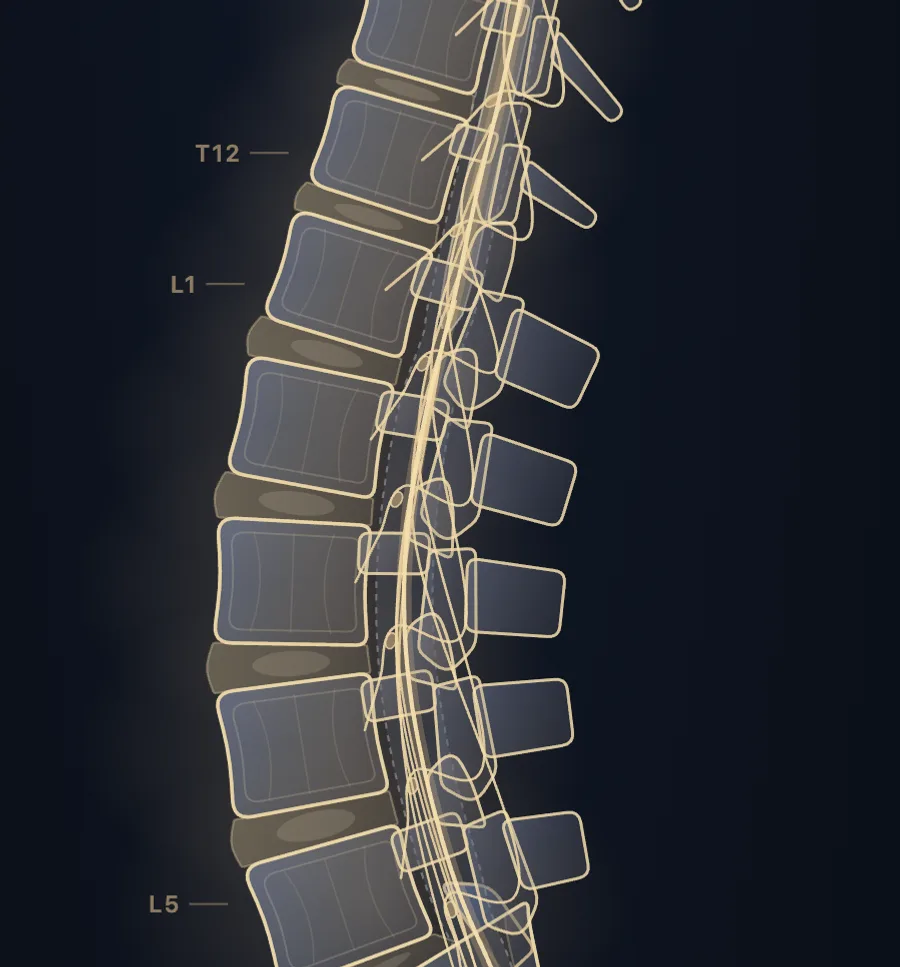
Slipped disc in the back and neck
What a disc is, why it sometimes presses on a nerve, when it gets better without surgery and when a surgeon starts to think about an operation. This page explains it in plain words.
Read moreSpinal stenosis and slipped vertebra
When the spinal canal narrows, or one vertebra slips forward over the one below, the legs can become painful and tired. This page explains the symptoms, which treatments do not need surgery, and when an operation is considered.
Read moreBrain tumours
What a brain tumour is, why not all of them are cancer, how they are diagnosed and what the treatment options are. This page is for patients and families who have just heard this news.
Read moreHead injury and bleeding in the brain
Which signs after a blow to the head mean you should go to emergency straight away, how a mild head injury (concussion) recovers, and when bleeding inside the skull needs an operation.
Read moreTreatment without surgery
Most disc, back and neck pain is managed by staying active, medicine, physiotherapy and sometimes an injection. This page describes the usual options and when to go back to the surgeon.
Read more
From the first conversation to follow-up
Five steps, one after another. At each one you know what comes next and why.
- Step 1 of 5.
Neurological examination and conversation
The doctor asks about your symptoms, history and medication, then examines nerve function: muscle strength, sensation and reflexes. Bring your MRI report and earlier records.
- Step 2 of 5.
MRI and imaging
Depending on your complaint you may need an MRI, a CT scan or a nerve conduction study to find the cause of the symptoms. Sometimes your earlier scans are enough.
- Step 3 of 5.
Deciding on treatment
Many patients do not need surgery and improve with medication, exercise and physiotherapy. The doctor explains the options and you decide together.
- Step 4 of 5.
Surgery, if it is needed
If surgery is needed, you hear beforehand what it involves, the anaesthetic and the possible risks, and you go through the preparation together.
- Step 5 of 5.
Rehabilitation and follow-up
Gentle movement, guided exercises and regular visits are part of the way. The support team stays with you during this time.
You are not alone on this path.
Treatment is more than visits and surgery. From MRI, CT and nerve studies to post-operative care and services at home, the support team coordinates the details so you and your family can focus on recovery.
MRI, CT and imaging
Quick appointments and results, second reads of images, and reports sent to your doctor.
Nerve conduction studies and rehabilitation
The support team books your appointment and refers you to rehabilitation and health specialists.
Post-operative care
Nursing and wound care after surgery, arranged for you.
Treatment and rehabilitation at home
When getting out is hard, part of treatment and rehabilitation comes to you.
Free transport with the support vehicle
Patient transport in a dedicated support vehicle, at no cost.
FreeLab tests and blood sampling at home
Quick lab appointments and results, with the support team following up on your results.
Pharmacy and specialty medicines
Help getting specialty medicines, with delivery for Tabriz residents.
Fast referral to specialists and sub-specialists
If you need another doctor, the support team arranges the appointment and referral.
Services marked "Free" are provided at no cost.
Simple answers to the first questions.
Do I definitely need surgery?
Not always. Many back and neck pains, even when an MRI shows a disc herniation or narrowing, improve with medicines, exercise, physiotherapy and changes in daily activity. Surgery comes up when those have not been enough, or when waiting is risky, for example with worsening weakness or severe pressure on the spinal cord. The decision follows a neurological examination, a review of your scans and a conversation with you.
Will I be paralyzed?
There is no general, certain answer to this, and nobody should promise one. What can be said is that new or worsening weakness in the arms or legs, or trouble controlling the bladder or bowels, is urgent and should not wait for an appointment. Surgery carries risks like any operation, including nerve injury. Before any decision, the doctor explains the risks that apply to you in plain words.
What does my MRI report mean?
An MRI is a picture of structure, not a treatment verdict. Changes such as a bulging disc or wear can also show up in people who have no pain. What matters is reading the images together with your symptoms and examination. Bring the files or films and the report to the visit so the doctor can look at them all together.
When can I go back to work?
It depends on the problem, on your kind of work, and on whether you had surgery. Desk work and heavy work have different timelines and no single number fits everyone. After the examination, the doctor will set a plan for you.
Is this symptom an emergency?
Some signs do not wait for an appointment: sudden weakness or numbness in both legs, loss of control of the bladder or bowels, the sudden worst headache of your life, weakness on one side or trouble speaking, a seizure or drowsiness after a head injury. In these cases call 115 (Iran's emergency number).
What should I bring to the first visit?
MRI and CT files or films and reports, records of earlier treatment and surgery, recent tests, a list of the medicines you take (especially blood thinners), your insurance booklet and ID. If something is missing, come anyway; support can help you get it.
How do I get an appointment?
Online booking is not open yet. Call or text the support number 09302272111 to get an appointment.
What about cost and insurance?
The visit fee and the list of insurers will be announced soon.
These answers are general and do not replace your doctor's advice for your situation.
The first step, a calm conversation.
Call support for an appointment or to ask your question. We are with you.
Support number